The AI That Reads and Understands Every Product
An AI engine that reads product fronts, barcodes, and ingredient lists — then indexes them, organizes them, assigns a unique ID to each product, and recognizes what they actually are. One messy shelf of packaging becomes clean, structured, machine-readable product data.
OVERVIEW
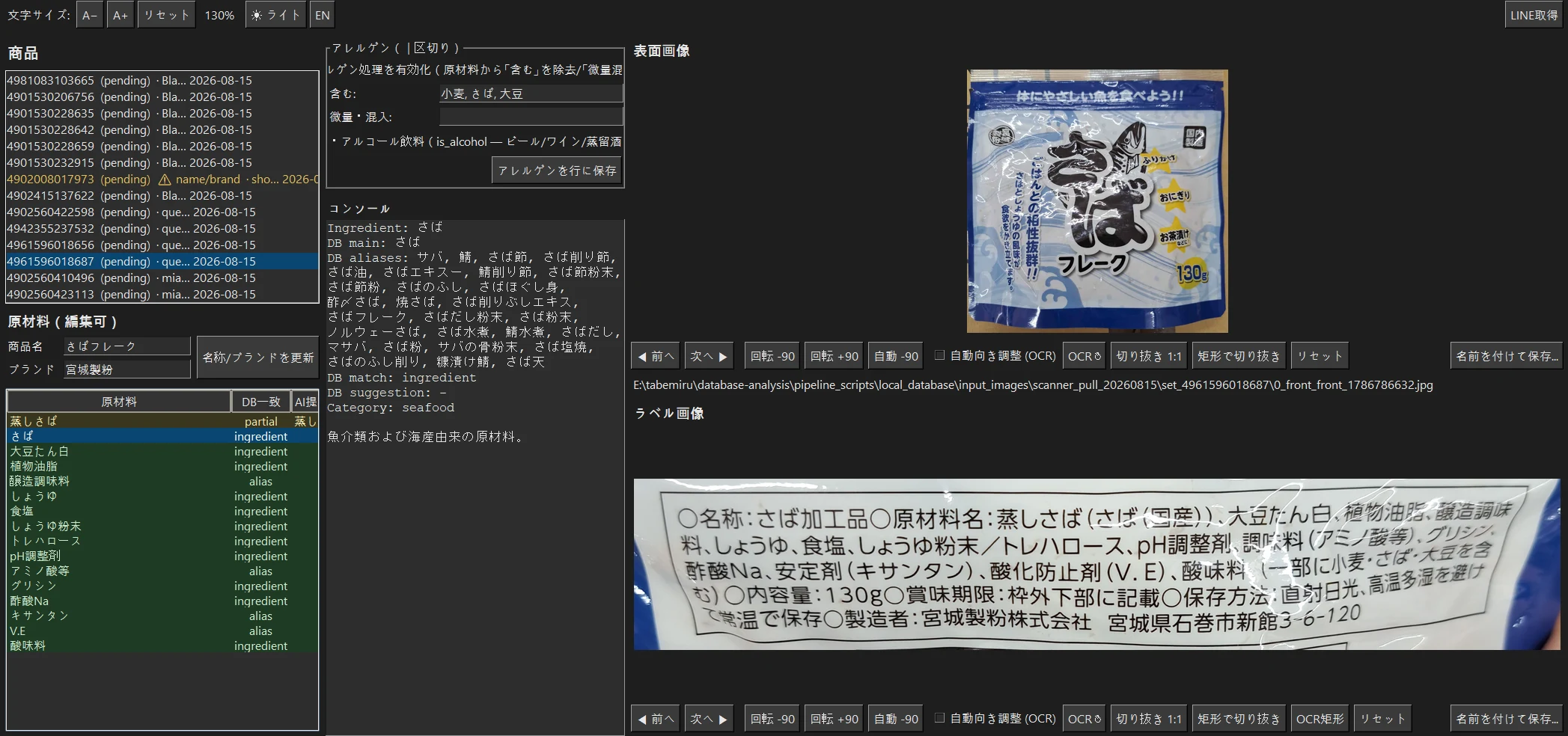
Point a camera at any product and the scanner reads all three layers of information at once: the marketing name on the front, the barcode, and the fine print of the ingredient list. It then turns that raw text into a structured, indexed record — parsing the exact structure of the ingredient statement, resolving each token to a shared catalogue of canonical ingredients, and assigning every distinct product a stable, unique ID. No manual data entry, no template setup. One messy shelf of packaging becomes clean, machine-readable product data.
CHALLENGE
The same item appears as kanji, katakana, hiragana, or an abbreviation depending on who wrote the label. Systems treat them as different products.
Ingredient lists are dense, free-form text. Extracting and comparing them by hand is slow and error-prone.
Without a stable identity per product, catalogs, inventories, and analyses can't be reliably linked or deduplicated.
CAPABILITIES
Reads the product front, barcode, and ingredient list in a single pass, capturing both what a product is called and what it contains.
Parses each ingredient list into an ordered, structured index and organizes products into a clean, queryable catalog.
Assigns every distinct product a stable individual ID, so the same item is recognized consistently across sources and over time.
Understands the meaning behind the text — recognizing that different labels, spellings, and forms can all refer to the same underlying product.
PRODUCT ALIASING
Japanese products can be written in kanji, katakana, or hiragana — often for the exact same word. The scanner normalizes across writing systems and spellings so those variants resolve to a single product.
Beyond spelling, the engine understands form and preparation. Powdered, sliced, grated, or whole — it recognizes they are all the same core ingredient and links them to one identity.
Place names on labels — regions, origins, and production areas — are recognized and understood, so origin-qualified products are grouped correctly instead of fragmenting the catalog.
RECIPE UNDERSTANDING
Manufacturers often list a prepared component by name — "egg salad" — without spelling out what's in it. The engine decodes the recipe into its constituents, so hidden ingredients and allergens surface.
When the manufacturer does spell out the breakdown in parentheses, that explicit list overrides the inferred recipe. The printed label is always the source of truth.
Some Japanese ingredients have no direct foreign name. The engine resolves them to the closest equivalent — making it a powerful translation aid for anyone reading a label in another language.
USE CASE
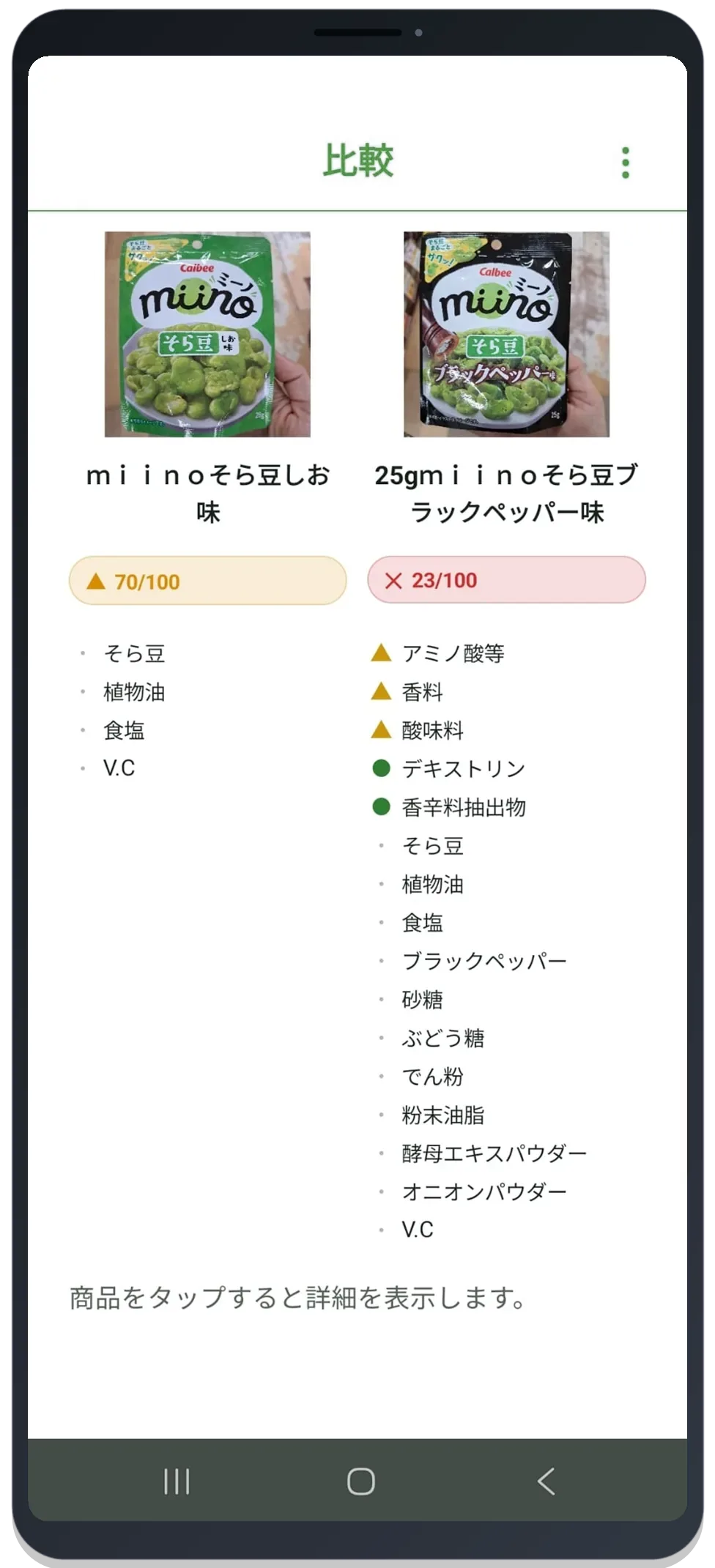
Labemiru — understand what's inside a product, at a glance.
Labemiru is a consumer app built on the Food Label Scanner. A shopper points their phone at a product — say, a bag of ginger candy — and the scanner reads the front, barcode, and ingredient list at once, then explains the contents in plain language.
Behind the app, the same engine spans three domains — food, personal care, and pet food — and is available through a lightweight barcode → analysis API. It is an informational tool, not a medical device.